
Expert Dryer Repair in Pensacola, FL – Same Day Electric & Gas Dryer Service
Our Proven Results in Appliance Repair
When your dryer stops working, it throws your whole routine off. Wet laundry starts piling up, and in Pensacola’s humid climate, that can quickly turn into a bigger problem. Clothes sitting too long can smell, mildew, and even damage your fabrics. You need a repair team that understands dryers and responds fast.
At Blue Wave Appliance Repair, we service all major appliances with technicians dedicated to each type. Our dryer repair Pensacola specialists handle nothing but dryers every day, so they know the systems inside and out. That focus means faster diagnosis and the right fix for your exact model. No guessing, no delays, just reliable service when you need it most.
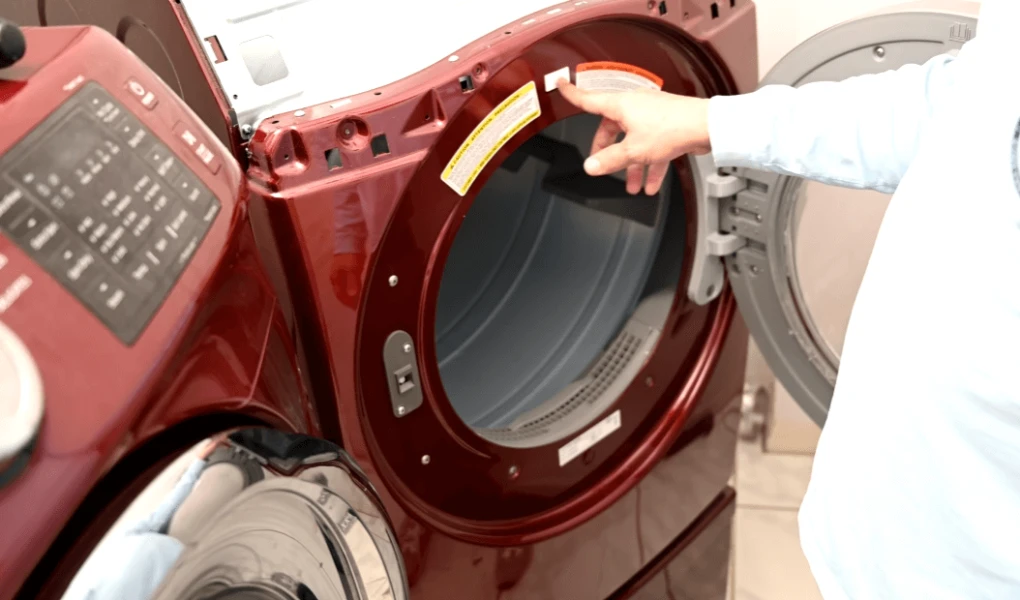
Diagnosing Your Dryer Problem—Common Issues We Fix Daily
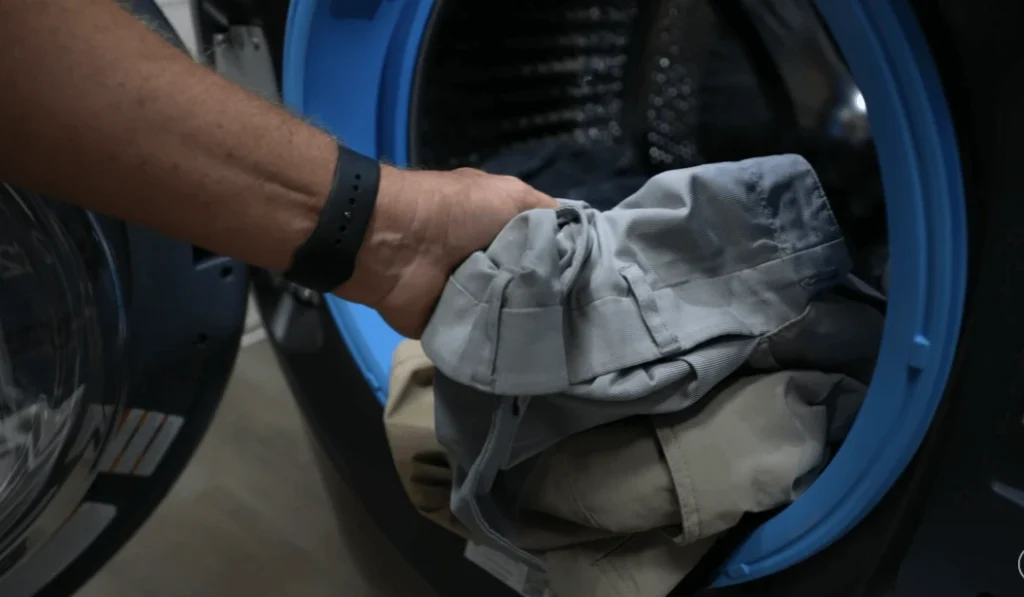
When Your Dryer Is Not Heating Properly
Your dryer tumbles but clothes stay wet. This happens to 68% of the dryers we service in Pensacola.
Temperature sensors fail when lint coating blocks their ability to read heat levels. These sensors normally show 10,000 ohms resistance at room temperature. When they fail, your dryer thinks it’s already hot and won’t activate heating.
Cycling thermostats control temperature by turning heat on and off. They fail in the open position, preventing any heat production. Testing requires checking continuity at room temperature – a good thermostat shows zero resistance.
Electric dryers need exactly 240 volts to heat properly. Many Pensacola homes have voltage drops due to corroded connections from salt air. We test voltage under load, not just static readings.
Gas valve coils open and close to control flame. After 5-7 years, these coils weaken. Your dryer might heat for 10 minutes, then stop as coils overheat and fail to hold the valve open.
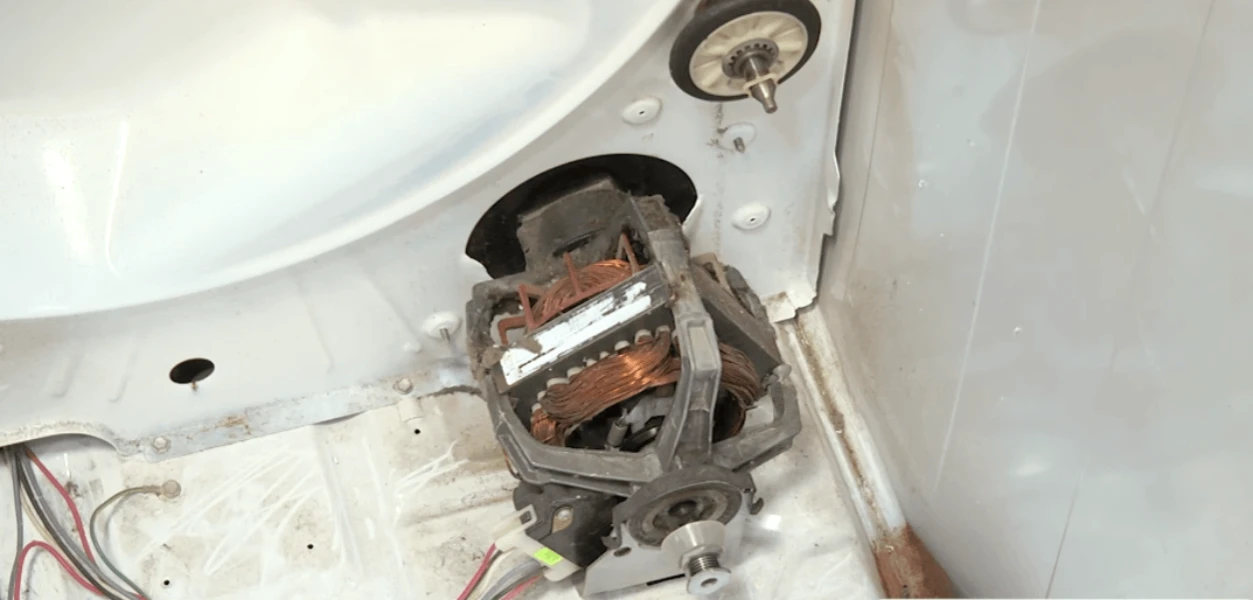
Solving Dryer Making Noise Issues
That squealing sound means your drum glides need replacement. These plastic strips support the drum’s front edge.
Blower wheels crack at the hub after years of high-speed rotation. A broken blade creates a rhythmic thumping that gets louder as the dryer heats up.
Motor bearings announce their failure with a high-pitched whine. The sound changes with drum speed. Once bearings fail, the motor overheats and damages windings within days.
Felt seals create a soft scraping sound when worn. These seals keep hot air inside the drum. Damaged seals let heat escape, forcing longer drying times and higher bills.
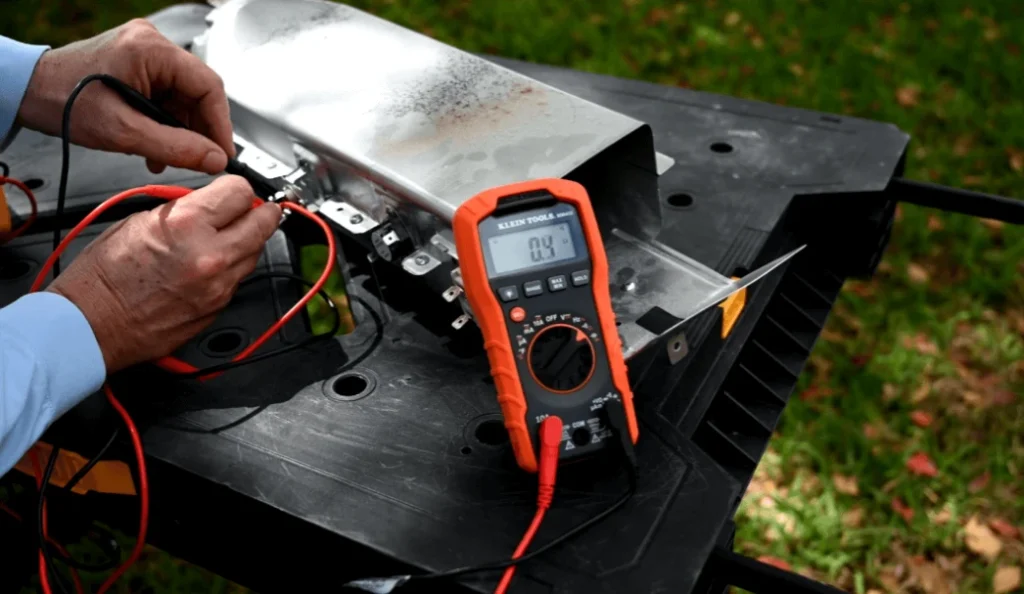
Dryer Not Turning On—Electrical Diagnostics
Start switches hide behind the control panel. Push-to-start models fail when contacts burn from repeated use. Knob-start switches break internally when plastic gears strip.
Drive motors draw 4-6 amps when running properly. Failed motors show infinite resistance across windings. Sometimes the motor hums but won’t turn—the centrifugal switch is stuck closed.
Terminal blocks melt from loose connections. This creates intermittent power that damages control boards. We see this weekly in older Pensacola homes with aluminum wiring.
Power cords rarely fail completely. Instead, one leg loses connection, giving you 120 volts instead of 240. The dryer runs but won’t heat.
Extended Drying Time Problems
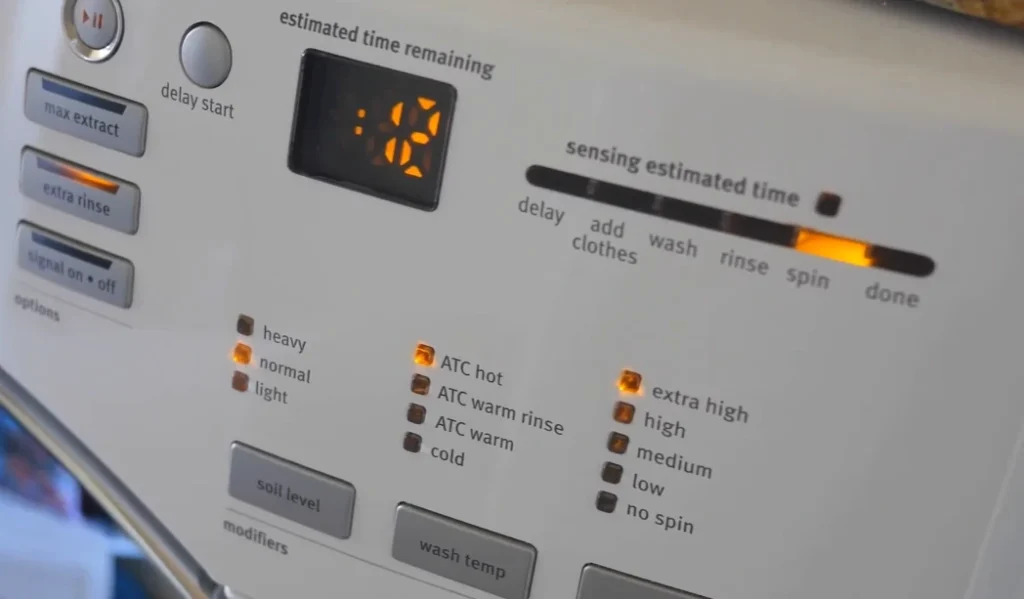
Airflow restrictions cause 43% of service calls. Your dryer needs 1,200 cubic feet per minute of airflow. Anything less doubles drying time.
Check your outdoor vent while the dryer runs. Feel strong, steady airflow? Good. Weak or pulsing air means blockage.
Moisture sensors use conductivity to detect wet clothes. Fabric softener residue creates an invisible film that blocks sensor contact. Clean sensors monthly with rubbing alcohol.
Incorrect venting kills dryer efficiency. Flexible plastic ducts reduce airflow by 20%. Runs over 25 feet need booster fans. Every 90-degree turn equals 5 feet of straight duct.
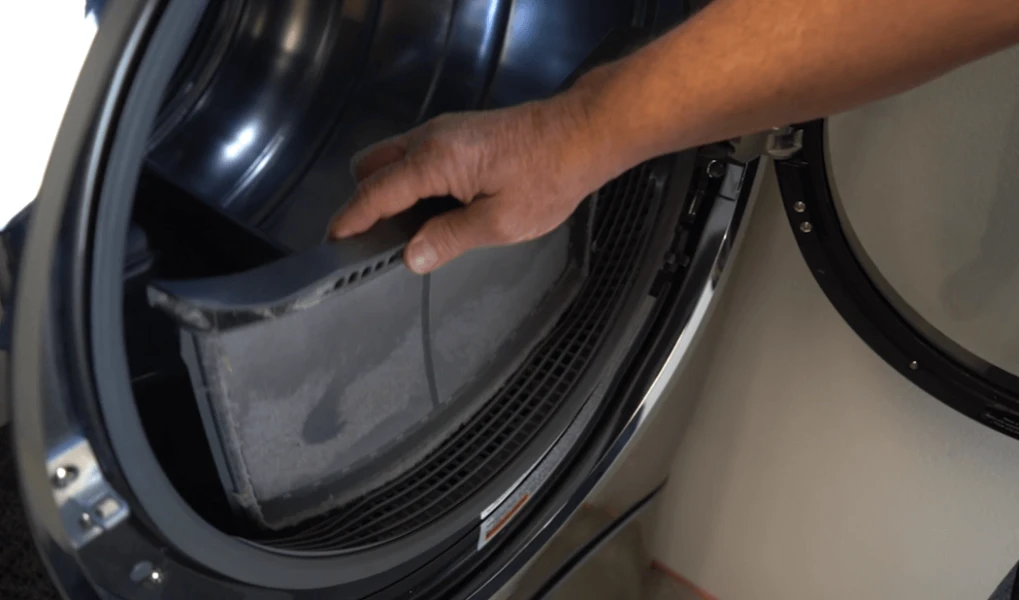
Lint accumulates in three hidden zones:
- Behind the lint filter housing
- Inside the blower wheel housing
- At duct connection points
Professional Dryer Repair Process
From Call to Completion
Phone Diagnostics Save Time
Your model number tells us everything. Find it inside the doorframe or on the back panel.When you call for dryer repair Pensacola service, we ask specific questions about drum rotation, heating, and error codes.Your answers help us pre-order likely parts.
Time estimates depend on symptoms. No heat issues take 45-60 minutes. Drum replacement needs 90 minutes. We schedule accurately so you can plan your day.
1
2
On-Site Technical Assessment
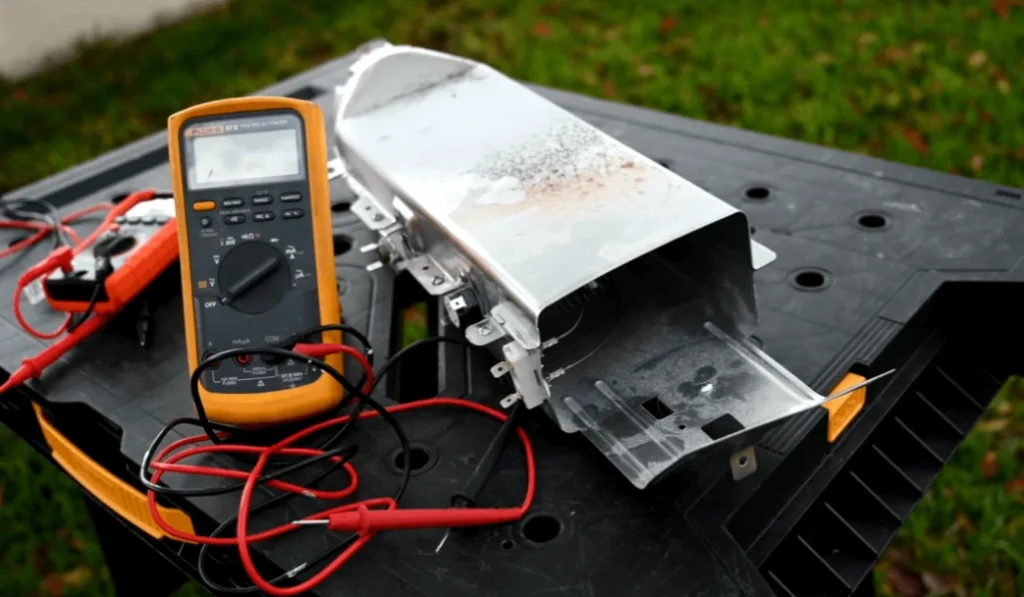
Multi-meter testing starts at the outlet. We measure voltage, check grounding, and test under load. Many problems trace back to power supply issues.
Component isolation means testing each part separately. We disconnect and test heating elements out of the circuit. This prevents false readings from parallel paths.
Safety inspection covers gas leaks, exhaust blockage, electrical connections, and lint accumulation. You receive a written diagnosis showing failed components, test results, and repair costs.
Repair Implementation Standards
OEM parts matter for longevity. Aftermarket heating elements burn out 40% faster. Generic thermostats trigger at wrong temperatures. We use manufacturer parts with full warranties.
Torque specifications prevent future failures. Terminal connections need 20 inch-pounds. Over-tightening cracks ceramic blocks. Under-tightening causes arcing.
Electrical safety requires proper wire routing. Heat-resistant wire stays away from moving parts. Ground connections get anti-corrosion compound.
Performance verification includes temperature testing, airflow measurement, and cycle completion timing.
3
Electric vs Gas Dryer Repair Expertise
Specialized knowledge for every dryer type
Electric Dryer Repair Pensacola Specialists | Gas Dryer Repair Pensacola Professionals |
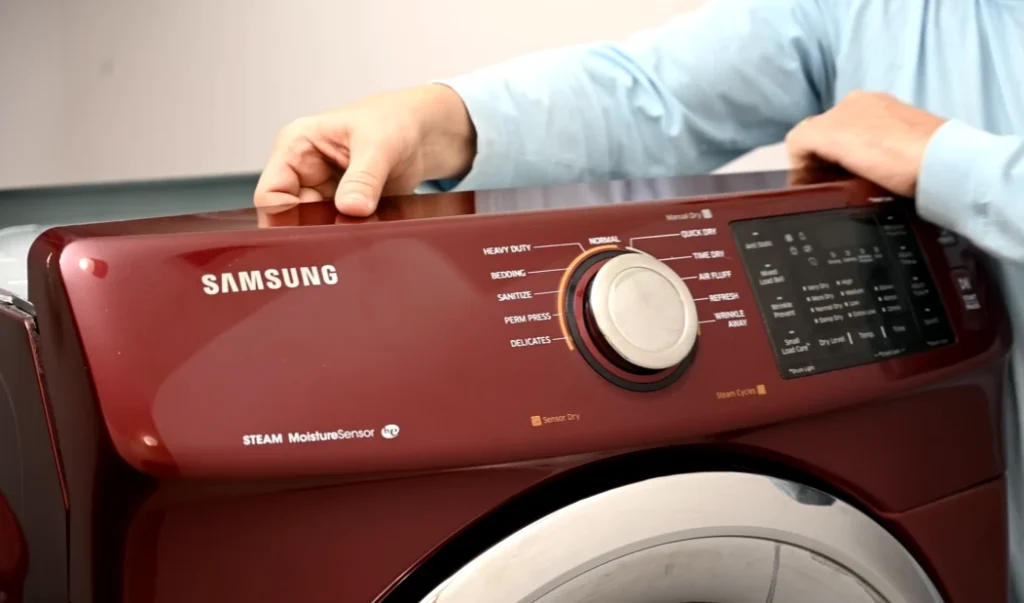
Your electric dryer needs 240 volts across two hot legs. Each leg carries 120 volts, 180 degrees out of phase. Lost neutral won’t affect heating but kills controls. | Gas igniters glow orange-white at 1,800°F. They draw 2.5-3.5 amps initially, dropping to 2.0 amps when hot. Failed igniters show infinite resistance or never reach operating temperature. |
Heating elements draw 20-25 amps at 5,000-5,600 watts. We test resistance first—it should read 8-12 ohms cold. Visual inspection reveals breaks, sagging, or hot spots. | Flame sensors detect successful ignition using flame rectification. The flame conducts electricity in one direction, creating DC current. Dirty sensors can’t detect flame, shutting off gas flow. |
High-limit thermostats protect against overheating. They open at 180-220°F depending on the model. Once tripped, they stay open until manually reset or replaced. | Gas valve solenoids open in sequence. The booster coil opens first; the holding coil maintains flow. When holding coils fail, dryers heat briefly and then stop—the classic intermittent heating pattern. |
Power consumption analysis reveals problems:
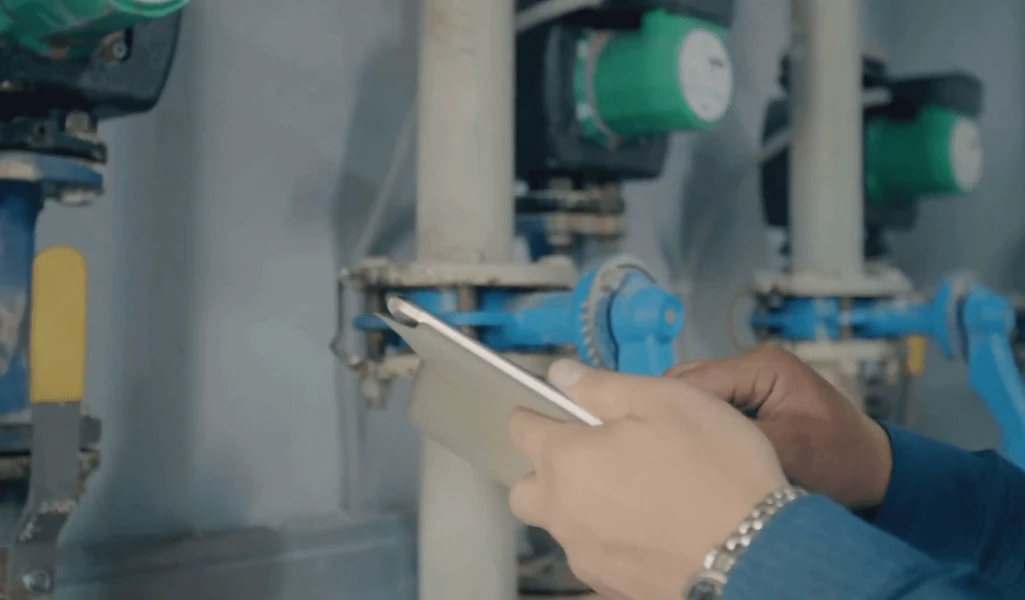
| Carbon monoxide testing protects your family. Incomplete combustion produces CO. We test at the exhaust with digital meters. Any reading above zero needs immediate attention. |
 |  |
Critical Dryer Components We Service
Dryer Heating Element Repair Specialists
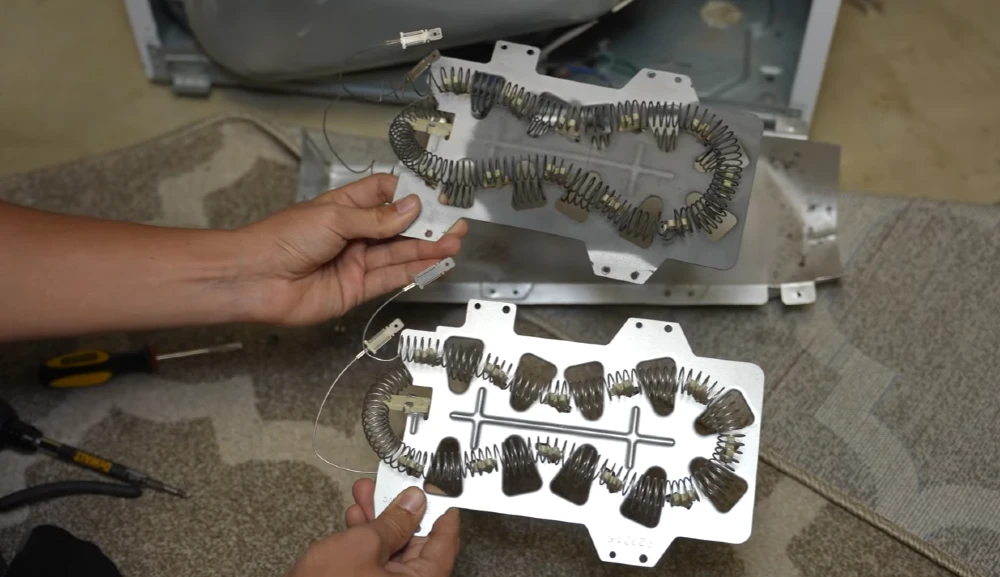
Resistance testing catches 90% of element failures. Set your meter to ohms, disconnect power, and remove one wire from the element. Reading should be 7.8-11.8 ohms depending on wattage.
Coil separation happens when nickel-chromium wire stretches. Coils touch the housing, creating a ground fault. The dryer trips the breaker instantly or won’t heat at all.
Housing damage occurs from overheating. Look for white powder (oxidation), warped metal, or burn marks. Damaged housing means restricted airflow caused the failure.
Energy efficiency drops before complete failure. Partially failed elements draw more current for less heat. Your electric bill climbs while clothes take longer to dry.
Advanced Dryer Timer Repair
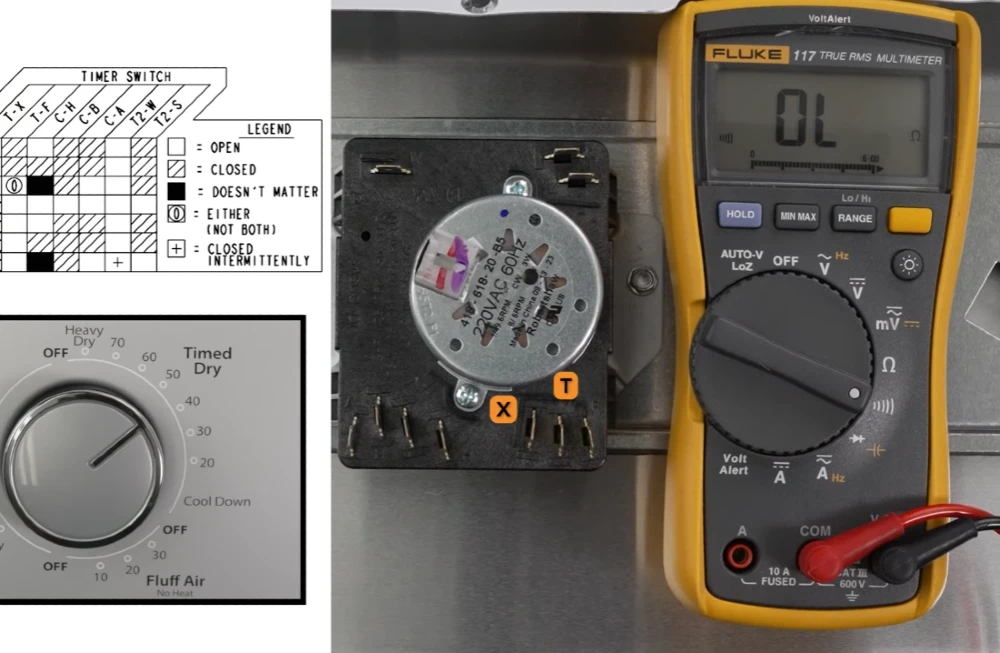
Mechanical timers use tiny motors advancing cams. These motors turn one revolution per hour. Stuck timers usually have broken motor gears or worn cam followers.
Electronic controls fail differently. Power surges damage processors. Moisture causes board corrosion. Failed displays show partial segments or nothing at all.
Cycle sequencing coordinates multiple functions. The timer starts the motor, waits for heat, begins the countdown, and activates cool-down. One failed contact disrupts everything.
Moisture control integration adds complexity. Auto-dry cycles read sensor input, calculate time, and adjust heat. Failed moisture control makes the timer advance too fast or never complete.
Precision Clothes Dryer Belt Repair
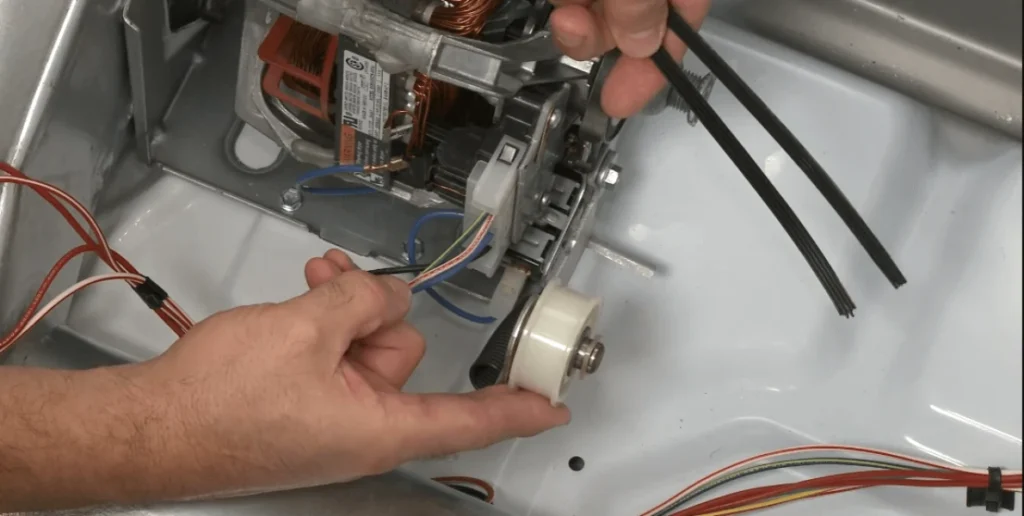
Belt tension affects everything. Too tight strains motor bearings. Too loose allows slipping during heavy loads. Proper tension shows 1/2 inch deflection with moderate pressure.
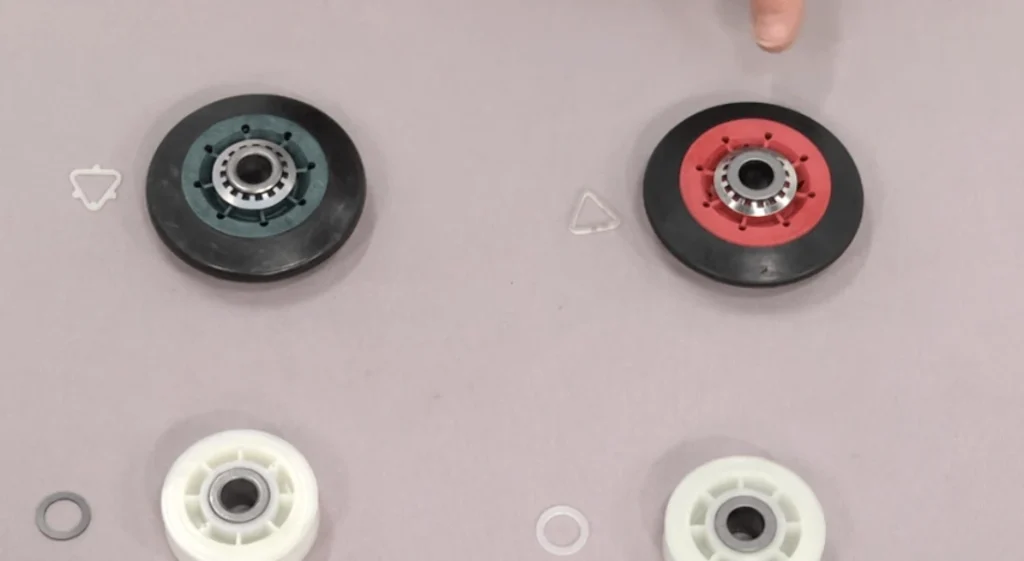
Idler pulleys maintain belt tension using spring force. Worn pulleys develop flat spots, causing thumping. Frozen bearings create squealing. Replace pulleys with belts for best results.
Drum rollers support rear drum weight. They should spin freely without wobble. Worn rollers create rumbling that changes with rotation speed.
Component | Average Lifespan | Pensacola Coastal | Replacement Cost |
Drive Belt | 8-10 years | 5-6 years | $125-180 |
Idler Pulley | 10-12 years | 6-8 years | $145-220 |
Drum Rollers | 10-15 years | 7-10 years | $165-250 |
Support Bearings | 12-15 years | 8-10 years | $185-280 |
Dryer Vent and Exhaust System Services
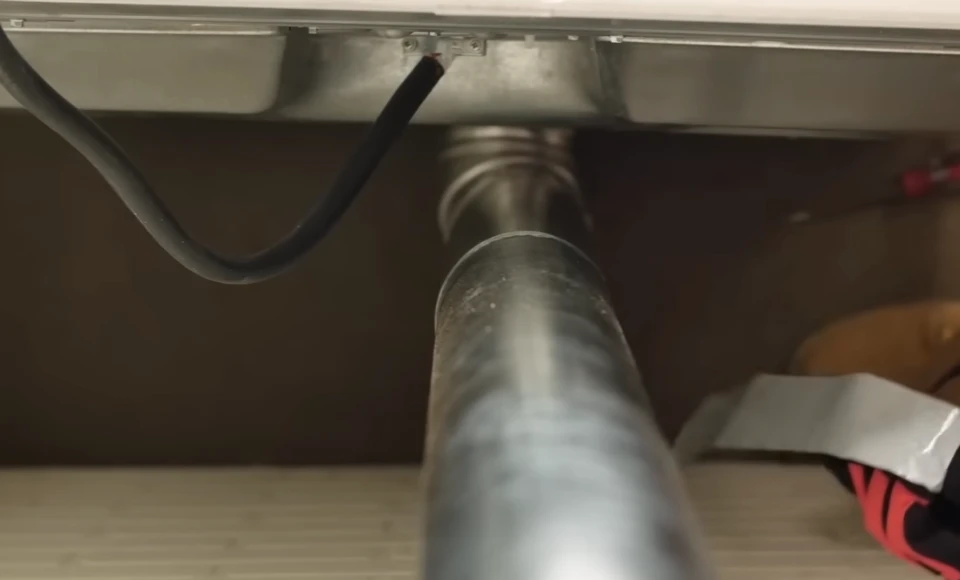
Dryer duct repair starts with proper materials. Rigid metal duct provides the best airflow. Semi-rigid aluminum works for short runs. Never use plastic or vinyl—they’re fire hazards.
Transition hoses connect the dryer to the wall duct. Use only UL-listed semi-rigid metal. Maximum length is 8 feet. Secure with metal clamps, not screws that catch lint.
Exterior vent caps fail fast in salt air. Plastic caps crack within two years. Metal caps rust through.Our dryer repair Pensacola team installs marine-grade stainless steel with backdraft dampers designed for coastal conditions..
Airflow measurement tells the truth. Professional anemometers read CFM at the exhaust. The minimum acceptable is 1,200 CFM. Below 900 CFM creates a fire risk and doubles drying time.
Commercial & Residential Dryer Repair Pensacola
Multi-Family Property Services
Apartment complexes need reliable service partners. We maintain 50+ unit properties across Pensacola.
Service contracts include priority response, volume pricing, and preventive maintenance scheduling for property managers seeking dependable dryer repair Pensacola solutions.
Condo associations benefit from bulk service agreements. One call handles multiple units. We coordinate with property managers for access and scheduling.
Commercial Laundry Operations
Coin-operated units run 12-16 hours daily. They need different parts, specialized knowledge, and faster response times.
Commercial dryers feature:
- Heavy-duty motors (2-3 HP vs 1/4 HP residential)
- Larger heating systems (50,000+ BTU)
- Steel drums (vs coated residential)
- Advanced control systems
Industrial capacity means 75-100 pound loads. These dryers use three-phase power, steam heat, or high-capacity gas systems. Downtime costs $200-500 per day.
Preventive maintenance contracts include monthly inspections, quarterly deep cleaning, and annual component replacement. Emergency response guarantees 2-hour arrival for covered equipment.
Dryer Safety Education and Prevention
Lint Management Systems
Hidden lint kills dryers and starts fires. You clean the filter, but lint hides in five other locations most people never check.
The blower wheel housing accumulates lint rings. These restrict airflow and overheat motors. Professional cleaning requires disassembly and specialized tools.
Behind the lint filter, a secondary chamber collects overflow. This space fills slowly over years. When full, lint bypasses the filter entirely.
Professional cleaning tools include:
- Rotary brush systems for ducts
- High-pressure air compressors
- HEPA vacuum systems
- Inspection cameras
DIY cleaning reaches 60% of lint accumulation. You can’t access internal components safely. Annual professional cleaning removes what you can’t reach.
Fire statistics demand attention. The U.S. Fire Administration reports 2,900 annual dryer fires. Leading causes: failure to clean (34%), mechanical failure (29%), electrical failure (16%).
Proper Loading Techniques
Fabric separation prevents tangling and improves drying. Heavy items go in first. Lightweight items on top. Mixed loads dry unevenly, wasting energy.
Load size affects everything:
- Small loads waste energy tumbling
- Large loads restrict airflow
- Optimal is 2/3 drum capacity
- Wet weight shouldn’t exceed 12 pounds
Heat settings match fabric needs:
- High heat: cotton towels, jeans
- Medium heat: synthetic blends
- Low heat: delicates, workout clothes
- No heat: plastics, rubber-backed items
Cycle selection saves energy and prevents damage. Auto-dry senses moisture and stops when done. Timed dry continues regardless, often over-drying clothes.
Technology Integration in Modern Dryers
Smart Dryer Diagnostics
WiFi connectivity fails for specific reasons. Your router broadcasts on 5GHz, but the dryer needs 2.4GHz. Network names with special characters confuse dryer processors.
App integration requires precise setup:
- Download manufacturer’s app first
- Create account with dryer model number
- Enable location services
- Connect during initial setup mode
Error codes tell stories. “AF” means restricted airflow. “F01” indicates main control board failure. “HC” signals heating circuit problems. Apps translate codes into plain English with repair guidance.
Remote diagnostics let technicians analyze problems before arriving. We review error history, cycle patterns, and component performance. This preparation reduces repair time 25%.
Energy Efficiency Optimization
ENERGY STAR dryers use 20% less energy than standard models. Heat pump dryers achieve 50% savings by recycling hot air rather than venting it.
Utility rebates offset upgrade costs. Gulf Power offers $50 rebates for ENERGY STAR models. Federal tax credits provide up to $840 for heat pump dryers through 2025.
Cost-per-load calculations reveal true expenses:
- Standard electric: $0.45-0.75 per load
- ENERGY STAR electric: $0.36-0.60 per load
- Gas dryer: $0.15-0.30 per load
- Heat pump dryer: $0.20-0.35 per load
Upgrade timing depends on current dryer age and condition. Dryers over 10 years old cost 40% more to operate. Factor in repair costs, energy savings, and available rebates.Factor in repair costs, energy savings, and available rebates when consulting with your dryer repair Pensacola FL, professional.
FAQs
Address
118 Majors Rd, Pensacola, FL 32503
info@pensacolaaplliancerepair.com
Phone
+1 (448) 432-0379